Getting a home ready to sell can turn into a very expensive guessing game. One person says to replace the counters. Someone else says to paint everything. Before you know it, you have a shopping list, three contractors, and no clear idea of what problem you are trying to solve. My preference is to slow down at the beginning so we can move with purpose afterward.
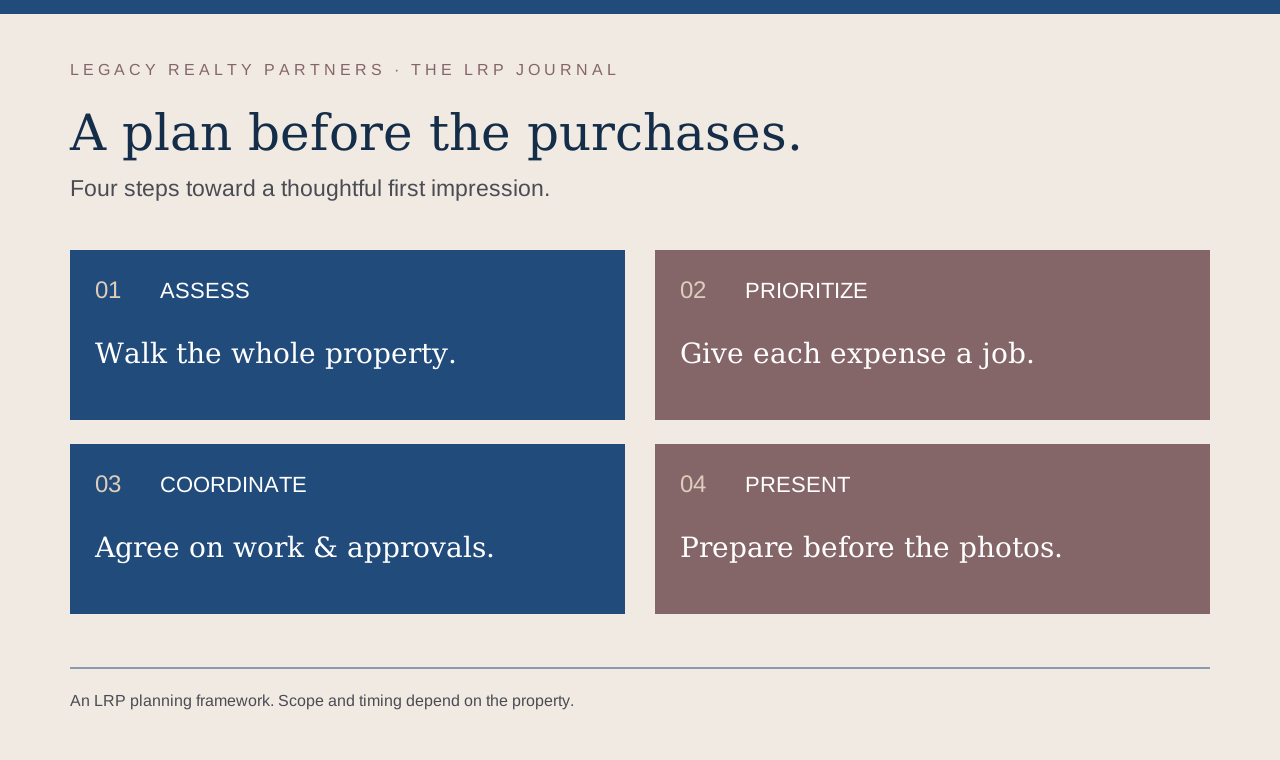
Make the preparation plan before making the purchases.
Look at the whole first impression.
I want to understand the home as a buyer will experience it: arrival, front door, main living spaces, light, layout, and condition. A beautiful new fixture will not resolve a confusing furniture arrangement or an obvious maintenance issue.
Walk through with a notebook before you buy anything. Separate the things you know need attention from the things you simply no longer like. Selling preparation is not the same project as creating your own dream renovation.
Give every proposed expense a job.
For each item, ask: What are we addressing? How will we know the work is complete? What will it cost? Who is approving and paying for it? Those questions keep a small refresh from quietly turning into a major project.
My planning categories are condition, presentation, and optional improvements. A possible condition issue needs appropriate evaluation. Presentation includes the way the rooms show and function. An optional improvement needs a property-specific reason to make the list. The categories help us discuss priorities; they are not promises that spending will produce a particular return.
Use staging to make the space understandable.
NAR’s 2025 staging research found that 83% of buyers’ agents said staging helped buyers picture a property as their future home. That is a survey finding, not a guarantee of a higher sale price.[1]
For me, the useful question is whether a buyer can understand the room. Can someone see a comfortable seating arrangement? Is the main path easy to navigate? Does each space have a clear purpose? We can discuss how much preparation is appropriate without assuming every room needs a complete transformation.
Coordinate the sequence, not just the appointments.
Our LRP standard is a consistent listing preparation and marketing process. We can do more when the property calls for it, but we do not create a lesser experience because a particular arrangement feels inconvenient.
The sequence matters: determine the work, obtain the required approvals, complete it, and then coordinate the final presentation and media. Your team should be working from the same plan. Seller-paid work still needs seller approval, and optional additions need a clear discussion before anyone commits.
Keep the plan connected to the sale.
When a home is ready, preparation does not become a reason to ignore market evidence. We still need to position the property thoughtfully, listen to feedback, and evaluate actual offers. Beautiful presentation and sensible pricing should support each other.
If you are thinking about selling, start with a walkthrough and a conversation. Bring your questions and your wish list. We can sort out what deserves attention now, what needs a professional opinion, and what may be better left to the next owner. You should understand the plan before the invoices start arriving.
Sources & further reading
Researched and verified November 12, 2026. Commentary reflects Maya’s approach; source links support the factual information.

Maya Galletta
Personal guidance for buying, selling, and finding your place in the Triangle. Legacy Realty Partners · RE/MAX United.
Talk with Maya ↗